
Blog
How to Choose the Right Transmission for Your JDM Build: Manual vs. Automatic, Used vs. Remanufactured

Your engine gets all the glory, but your transmission is what actually delivers that power to the road. A mismatched or poorly chosen gearbox can turn a perfectly good build into a frustrating daily headache, while the right transmission makes your car feel effortless to drive, reliable to own, and genuinely fun to push. For anyone building a JDM car — whether it’s a dedicated drift machine, a comfortable daily driver, or a weekend track warrior — choosing the right transmission is one of the most important decisions you’ll make.
This guide covers everything you need to know: the differences between manual and automatic, how used and remanufactured units compare, what to inspect before you buy, and how to match a gearbox to your specific driving goals.
Manual vs. Automatic: It’s Not Just About Preference
The manual-versus-automatic debate gets framed as pure personal taste, but the truth is that each type genuinely suits different builds and driving styles. Being honest with yourself about how you’ll actually use the car will point you toward the right choice faster than any brand loyalty.
Manual Transmissions. A manual gearbox gives you full control over your shift points, engine braking, and driving engagement. It’s the default choice for drift builds, where clutch control and precise gear selection are essential to the discipline. It also tends to be the preference for enthusiasts who simply enjoy the act of driving. Manuals are often simpler to service and, in many popular JDM platforms, more readily available in good condition.
Automatic Transmissions. Modern automatics have come a long way, and they offer their own distinct advantages. In heavy traffic, a well-sorted automatic is dramatically more comfortable to live with day to day. For a daily driver that spends hours a week in stop-and-go conditions, that comfort can be worth far more than the engagement of a manual. High-performance automatic units can also shift faster than most drivers could manage with a clutch, making them the right choice for certain builds.
The wise approach is to decide based on your intended use, not on what looks cool. If you’re honest about the fact that your “weekend warrior” mostly sits in commute traffic, the automatic may serve your happiness better than the manual ever would.
How Driving Purpose Shapes Your Choice
Your transmission should be chosen to serve a specific driving mission. For a drift car, you want a manual with robust clutches, a good balance for clutch kicks, and the ability to handle repeated hard shifts without complaining. Gear ratios matter enormously here — too tall, and you’ll struggle to initiate drifts; too short, and you’ll be shifting constantly.
For a daily driver, durability, smoothness, and comfort take priority. You want a gearbox that shifts cleanly every time, doesn’t whine, doesn’t grind, and doesn’t cost you a fortune in fuel or maintenance. Both manuals and automatics can serve this role well; the decision comes down to how much stop-and-go traffic you endure.
For a track or spirited street car, you need a transmission that can handle sustained hard driving and high torque without overheating or failing. Consider the torque capacity of the unit you’re choosing — a transmission rated well above your engine’s output gives you a comfortable safety margin that extends the life of the gearbox.
Used vs. Remanufactured Transmissions
As with engines, transmissions come in used and remanufactured forms, and the right choice depends on your priorities.
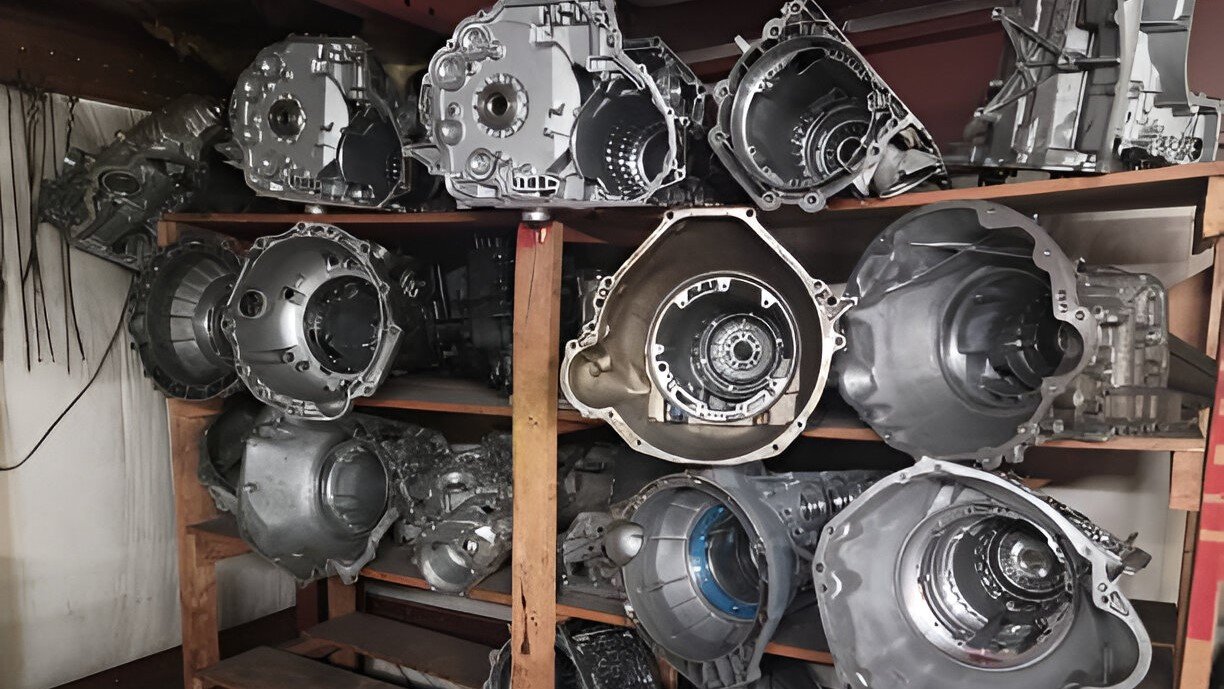
A used transmission is a gearbox in its original, as-pulled condition, sold after inspection. Used units cost less and are ideal when you’re working to a tight budget, when you plan to modify or rebuild the gearbox yourself, or when you need a specific original unit for a numbers-matching or restoration project.
A remanufactured transmission has been completely disassembled, cleaned, and rebuilt with fresh components before sale. Worn gears, synchros, seals, clutches within the unit, valve bodies, and solenoids are inspected and replaced as needed, and the unit is tested as a complete assembly. Remanufactured units cost more but provide far greater reliability guarantees — which is invaluable if a transmission failure would leave your daily driver stranded.
What to Inspect Before You Buy a Used Transmission
If you’re considering a used transmission, the inspection process is your best line of defense against buying trouble. A thorough inspection covers several specific areas.